Your swing determines how you will play, feel, and react to events on the course
First swing attempt
Your first swing attempt at a golf ball will be a completely different experience.
For example, you might attack it with all of your force. You might be gentle and focus more on making contact. You may or may not have prior experience in golf. Regardless, there are many common mistakes in the early stages of developing a swing. Your first attempt is your building blocks for your golf swing and career.
Learning the swing from others
Analyzing the pro’s swing will help you go from swinging aimlessly to building your fundamentals in the swing.
These players have muscle memory and training discipline, not to mention their countless hours of practice. Golf can be a difficult game and the pro’s didn’t get there over night. That being said, watching and understanding their swings, so you can eventually utilize it will be a huge game changer.
Although watching is helpful for pointers and an example of what you can do to help improve your consistency, it is necessary to take action and actually get out hitting some balls yourself.
This way, you can actually see what’s working, and what needs working on.
Pro’s have a great understanding with the swing, and to learn from them is very helpful, but if your swing is unique and it’s working, you don’t always have to change swing styles. Although, different swing styles can still use each others tips.
Finding your feel in your swing
It is crucial to find your swing, a swing that your comfortable with, and one that is consistent.
Constantly editing your swing to improve on small things is very efficient, but making huge changes constantly will keep you in the beginning stages of golf.
To find your feel with the golf club, you should be able to consistently make good contact with the golf ball for multiple days in a row.
Not making this contact right away? That’s NORMAL, keep practicing.
Training a swing that isn’t comfortable right away, give it some time. If it’s still uncomfortable and not repeatable after a long period of time (usually a season for most progress), then it’s efficient to switch swing styles all together.
Common mistakes in the early stages
The first step in progress towards these mistakes is admitting it’s a problem
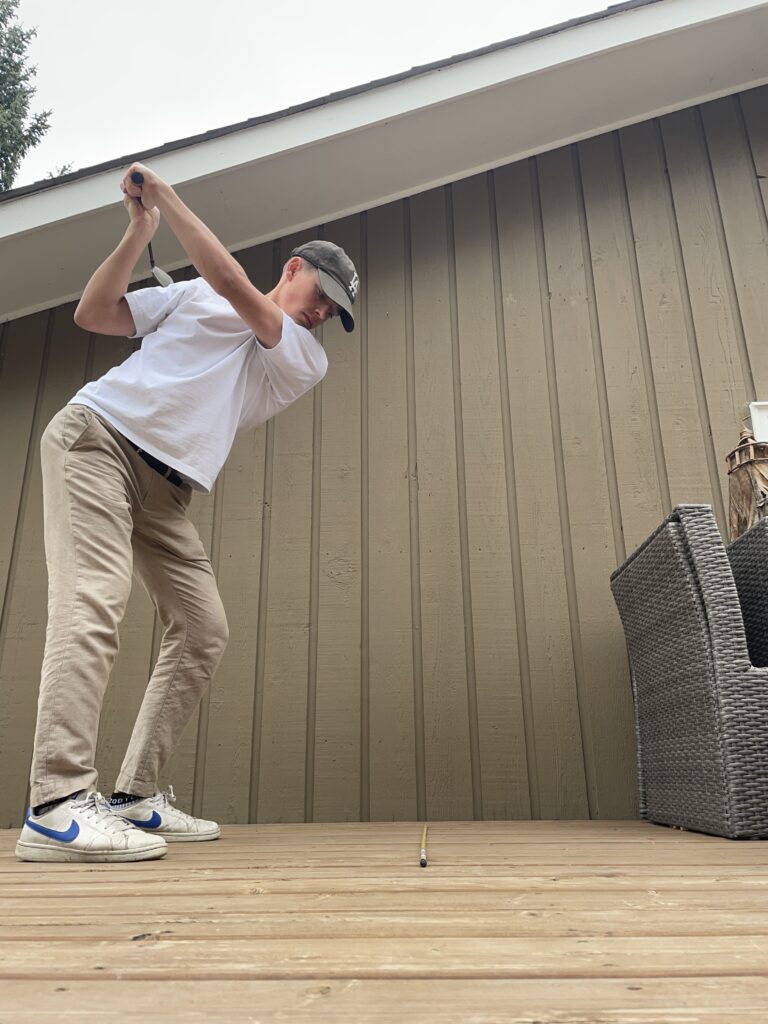
Swinging over the top
-
- Fast swing tempo
-
- Trying to kill the ball
-
- Out to in swing path (arms only, contact made across your body)
Downsides:
-
- Little power generated, meaning little distance
-
- Lots of spin (develops the slice)
-
- Very inconsistent contact
Solution:
The most common fix in the over the top swing is practicing swinging in to out. This is done by moving your club in towards your back foot, and then following through with the thought of your club extending towards something in front of you, rather than behind you. This will not only help clear up contact, but your ball flight will be straighter or have draw spin on it, bending the ball right to left for right handed players, or left to right for left handed players.
Another solution to swinging over the top would just be slowing down your tempo. The reason that this works is because a fast tempo makes you have no pause in transition between the backswing and downswing, meaning your arms will take over, and they naturally will cut across the ball, causing an out to in swing.
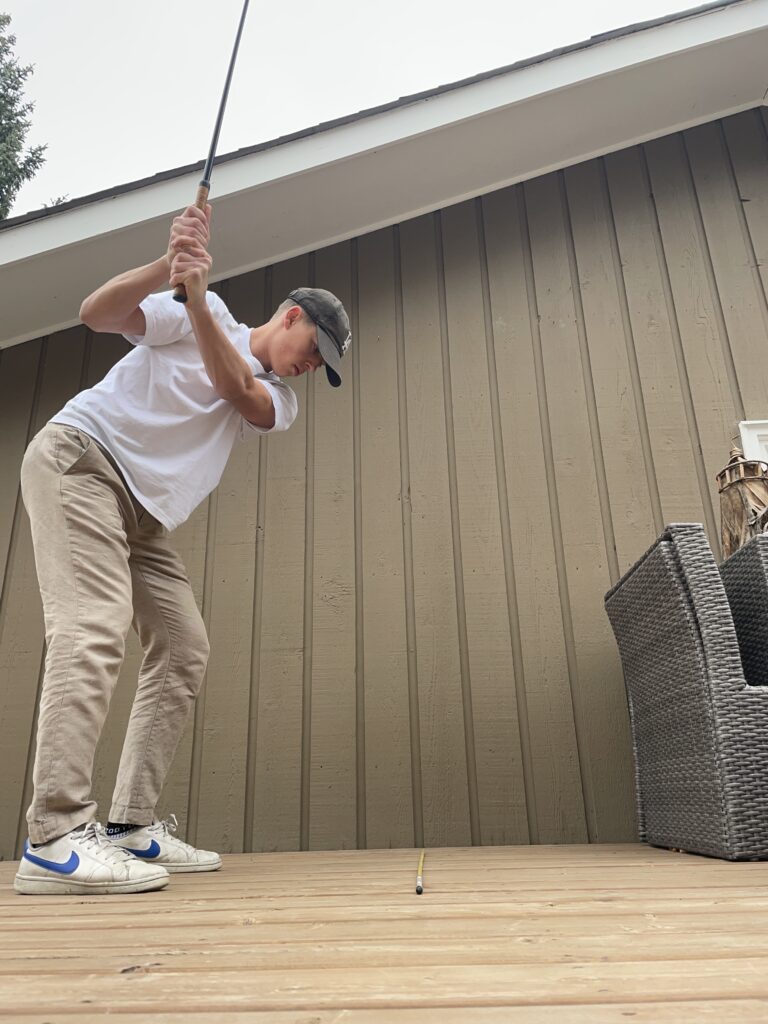
Off alignment
-
- Shoulders not square
-
- Aimed to the side of the target
-
- Too much or too little knee bend, not leaning over the ball, feet not shoulder width apart
Downsides:
-
- Varied accuracy
-
- Less power generated
-
- Inconsistent contact
Solution:
A solution to alignment in the golf swing is having a routine and mental checklist before hitting the ball. Ensuring that your stance, ball position, and aim line are correct will make a huge difference in the direction of your shots.
Another solution is to get someone to tell you where it looks like you’re aiming towards. It’s great to have this done to build a memory and feeling of when you’re lined up way off the target.
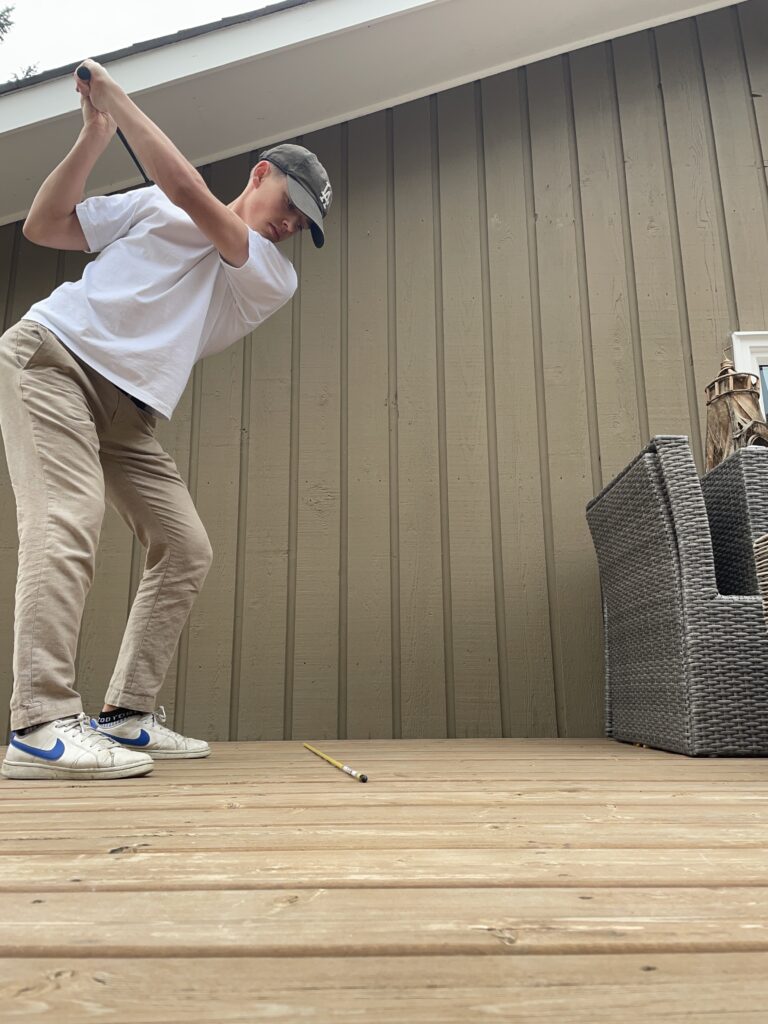
Not rotating
 Proper rotation where the hips are active
  Only arms are moving and less power is generated
-
- Upper body only swing
-
- Hips and upper body don’t line up
-
- Not enough shoulder rotation and lead arm bends as an outcome (issue)
Downsides:
-
- Power comes from rotation
-
- Miss hits from not being in sync
-
- Different ball spins and directions are forced outcomes, not purposely done
Solution:
Looking in the mirror and checking for your body to rotate together is a great method of practice. This will help you rotate for power, as well as create consistency and alignment in your swing.
Starting slow and with small swings is another beneficial practice. Allowing yourself to build up the skill and add more to the equation later is a great start.
VERY COMMON
Incorrect weight transfer in your swing
 Leaning backwards after impact causes scooping and loss of power
  Properly “loading” the backfoot with weight is a key to weight transfer and power
 -
- Inverted
-
- Off timing
-
- Incorrect amount of weight
Downsides:
-
- Miss hits on the ball
-
- No power
-
- Extending and or losing balance
Solution:
The weight transfer in the golf swing is absolutely crucial. Inverted weight is where your weight is on your lead foot in the backswing, rather than the downswing when you get your weight through the ball. To fix this, practice your swing but focus on putting almost all your weight on your back foot during the backswing, meaning it can only move forward with you in the downswing.
The key is to practice the weight transfer correction while keeping your head in the same place. If your head moves, then your swing relies on timing, which is very inconsistent, and not something you want to have in your swing.
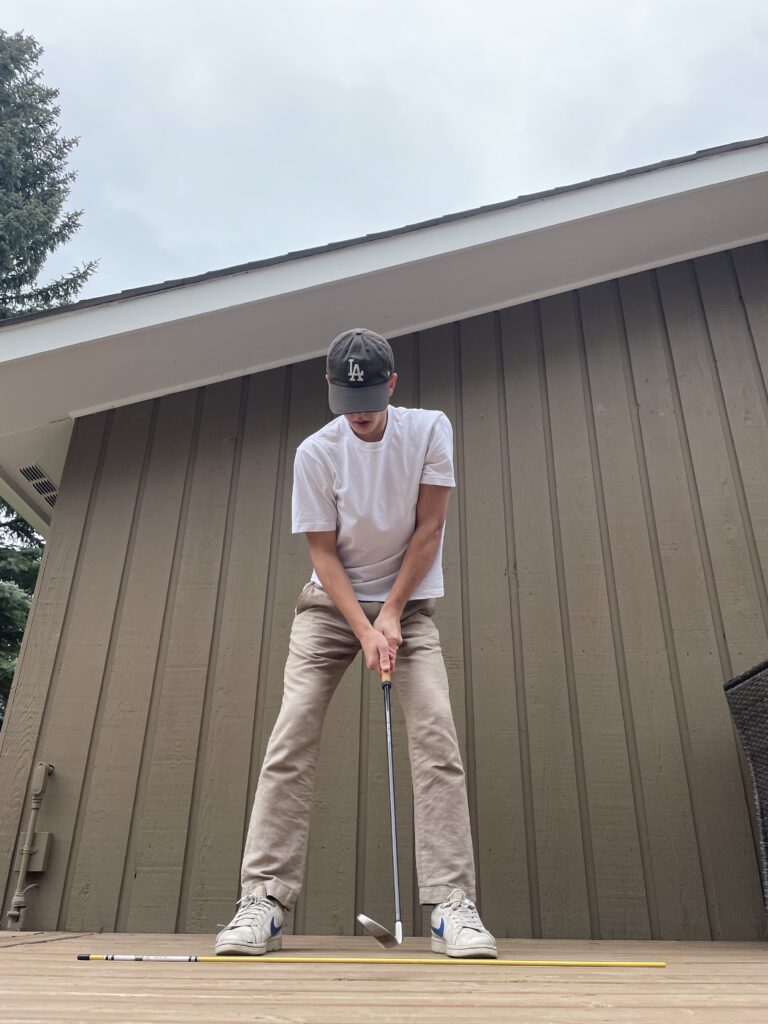
Swinging up on the ball
-
- Incorrect weight transfer
-
- Standing up at impact (on the left)
-
- Timing and incorrect wrist angles (scooping on the right)

Downsides:
-
- Very inconsistent
-
- Lots of thin and thick shots
-
- Little height and improper ball striking
Solution:
Long story short, irons function to hit down on the ball. The science behind this is that the grooves and force down on the ball actually makes the ball rise, because the ball can only hit the “sweet spot” of the clubhead when hitting down on the ball. Hitting down also allows you to make a divot after the ball, meaning proper contact and your catching all of the ball. Hitting up will mean the edge of your club face is hitting the ball, meaning there will be no height to your balls trajectory, not to mention it feels like your hitting a rock. The endpoint of your shot is unpredictable and uncontrollable, and there is potential for thick shots, where you hit the ground before the ball.
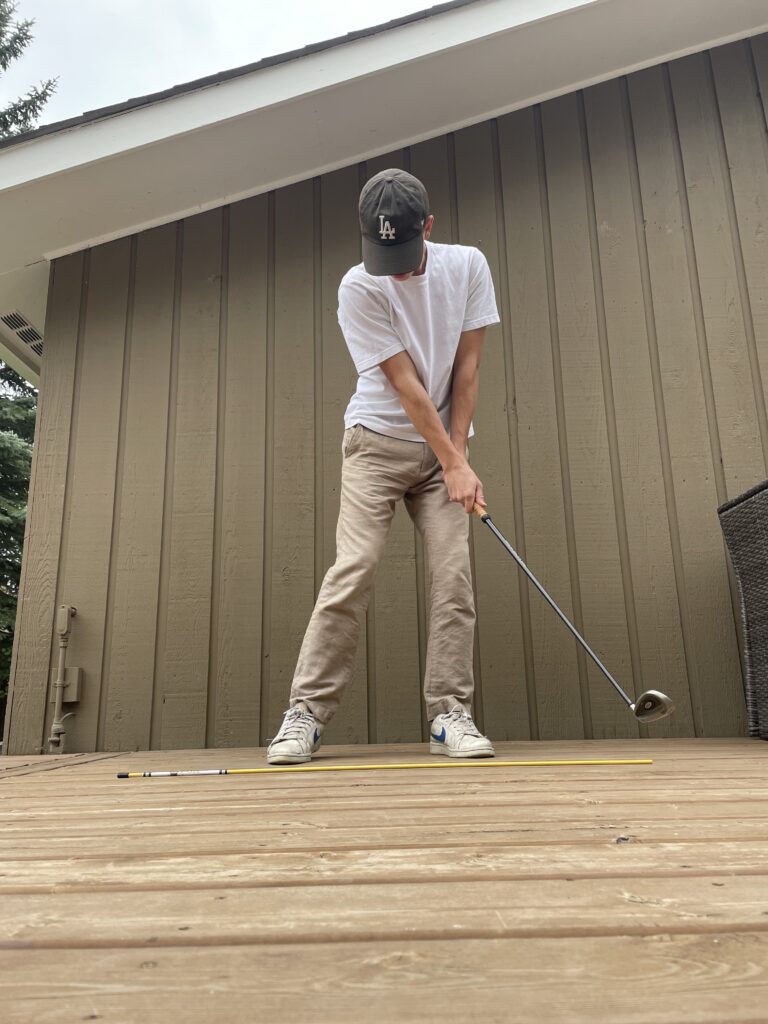

The solution to this issue is fixing your weight transfer, which adds power and proper positions to your swing. Next, focus on your wrist angles and keeping your lead arm straight. Both done with correct rotation. Proper wrist angles are hinging your wrists and keeping your arm to your knuckles straight.
Driver is the club you hit up on because it is designed for that
Wrist hinges
-
- Common wrist angle issues:
-
- Cupped (bottom image below): Looks like your flicking your knuckles towards yourself. You can think of it as your revving a motorbike.
-
- Too much bow can be an issue (middle image below): Looks as if you’re pushing your hands down. The Bowed wrist is played by some professionals, like Jon Rahm, but a common and consistent technique is keeping your wrist straight. This way you can have a ruler go straight down your forearm to your knuckles with no gap between your skin and the ruler.
 This is a flat wrist line: The wrist isn’t bowed nor is it cupped
 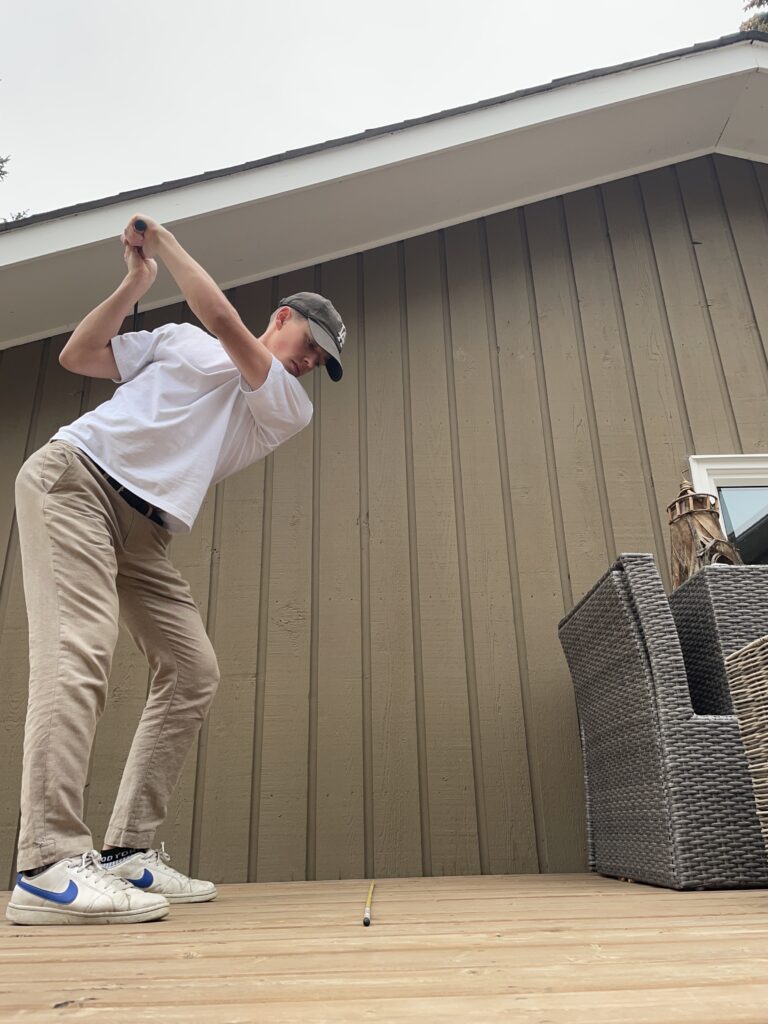 This is a bowed wrist, where the wrist points to the ground
 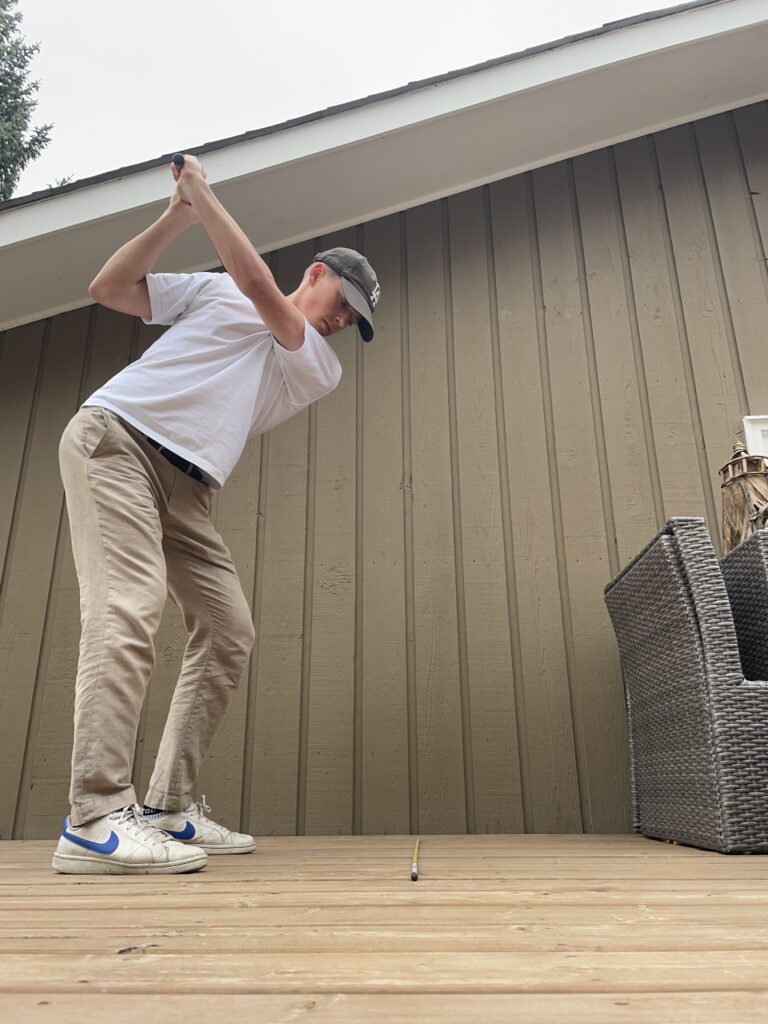 This is a cupped or flexed wrist, where the wrist points more to your head
 Proper weight transfer, rotation, and wrist movements will help you hit down on the ball. Having a steeper swing and the intention of hitting down on the ball while catching the ground after will also add power and distance to your swing. Without catching the ground after and not “picking it clean,” where you time it correct while sweeping at the ball (upward), there’s a higher chance for mistakes.
Helpful equipment for swing practice
Clubface detector alignment

-
- Square club face
-
- More consistent and better impact
-
- Distance and power
This attachment will show you how you’re lining your club face up to the ball. It will go on any club and will make a huge difference to your game.
If you have struggled with direction, distance, height, and consistency in golf, a lot of your problems will stem from club face and impact position. This item tells you where your club face is directed at any point in the swing.

Aim training alignment rod
-
- Accuracy
-
- Fits in bag
-
- Shot shapes
Whether you’re training for accuracy, a certain shot shape, or either, an alignment rod will not only give instant feedback, but it will also make sure you build up your confidence as a golfer
For more experienced golfers, the alignment rod will help with shot shaping and more advanced swing techniques.
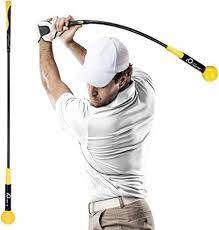
Practice Club
-
- Light
-
- Flexible
-
- Warmup
This club can be used for warmup or training, and provides feedback like no other. Many beginners will use this club, but that doesn’t exclude more advanced golfers.
Grip strength, speed, flexibility, and more are trained with the practice club and results will show.
Practice Net

-
- Ball striking
-
- Speed
-
- Mobile
The practice net can be used and moved anywhere. If you’re not looking to drive to a range or a course, this net is for you. It’s also for you if you’re looking to squeeze in extra practice.
The dimensions and sizing of the net allow golfers to use without worry of damaging anything nearby. Targets and aim points make it more fun to use too! Just make sure there is protection behind the net incase.
Practice!
Now you know what you need to know to improve your golf game and lower your score. Setup a training schedule and keep practicing, while having lots of time for video analysis and learning from the pro’s. Time to break par!
You got this!